· Product
Copying successful products doesn’t mean you copy their success
I’ve worked on several products over the years, and I’ve started noticing patterns. Sometimes, my intuition just screams, “That’s not gonna work.” I couldn’t always put it into words or explain exactly why it bothered me.
Then I started diving deeper into the world of startups and product management. The more I learned, the more I recognized patterns from my own work. I began to understand why certain approaches are risky and what makes them more likely to fail.
I want to document these patterns. The first one I want to write about is “Copying a successful product doesn’t copy its success.”
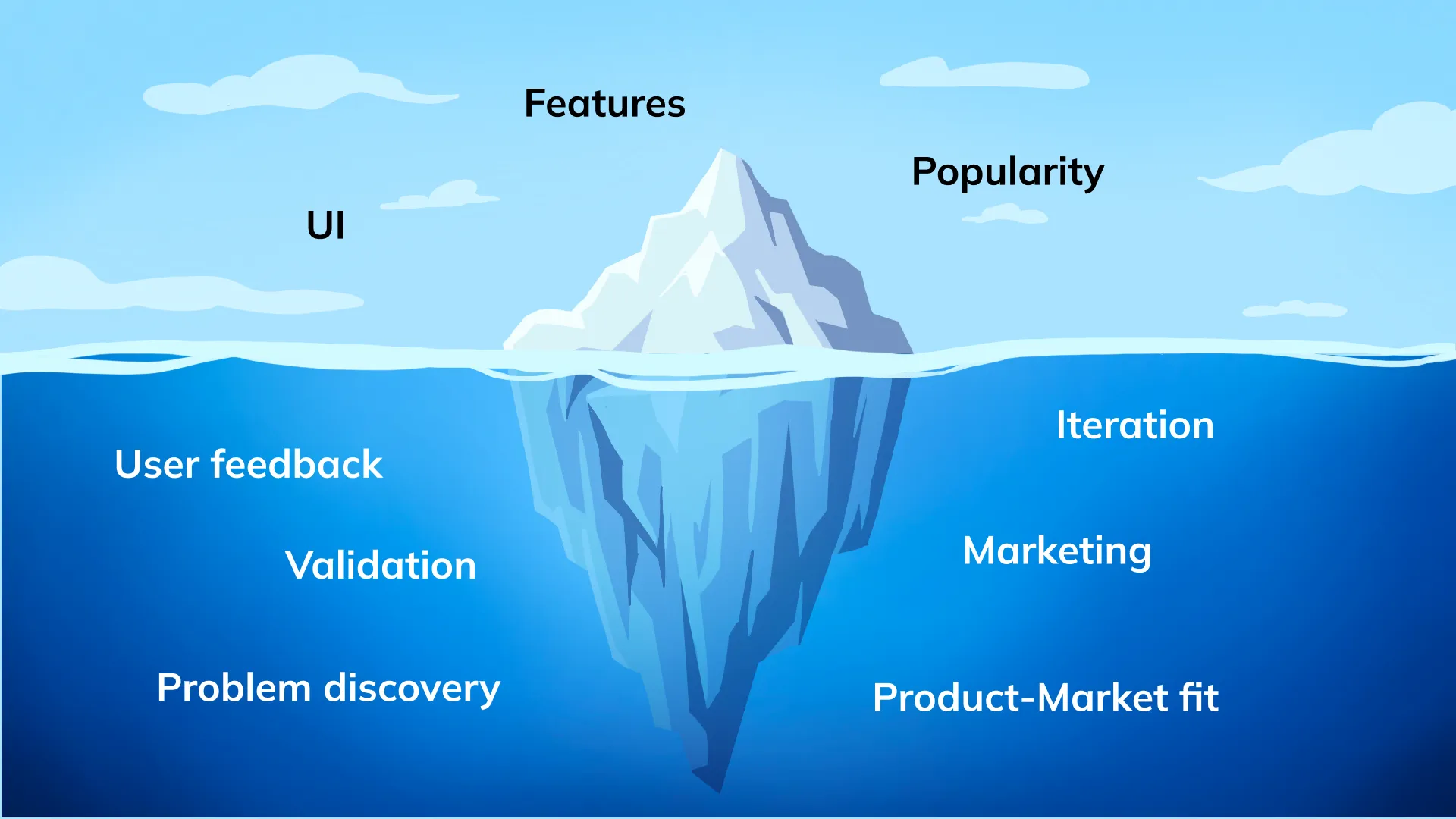
Features we see in a successful product are the end result, but we don’t usually see what’s underneath. That includes the problem they were solving, who their users are, and years of iteration that made those features work. That can’t be copied overnight by just rebuilding the interface.
That’s why building a chat app like WhatsApp won’t make people move to your app. Nobody switches to an app for more features when their connections are already somewhere else.
Some founders go further. They don’t just want to be one type of app. They want to be everything by combining multiple successful apps in one place, which makes it worse. Each feature was validated in its own product and for its own users. Putting all of them in your product won’t guarantee your success. The more unvalidated features you add, the more complicated it gets. In the end, the product overwhelms people before they understand why they should use it.
I once worked as a designer on a community platform. The plan was to launch with social feeds, groups, events, profiles, and videos, all from day one. The idea was that with all these features, it could compete directly with the biggest platforms. They even had partners to create content for it. I had a feeling it wouldn’t work, but I didn’t have the guts to say anything while everyone else was excited about it. A community doesn’t happen just because the features exist. It’s the people and the reason they gather. People already had their friends and communities on other platforms, and good content alone wasn’t enough reason to move. After launch, no one came, and the platform shut down in the end.
So what can you do instead?
Start from the problem, not the solution
Instead of “Let’s build a community app like Facebook,” start with what problem you’re solving and whose problem it is. Where do those people gather today, and what’s not working for them there? A feature idea tells you what to build, but not whether it solves the right problem.
Build the smallest version to test the idea
Before building a new product, start by solving one problem. Look at how Airbnb started. Brian Chesky and Joe Gebbia didn’t build a big platform. They made a simple website and rented out air mattresses in their apartment during a design conference, when hotels in the city were fully booked. They got three guests. That small test showed people would pay to stay in a stranger’s home.
Let user feedback guide your features
When your idea has been validated, don’t rush to add everything at once. Listen to what your users ask for, what goal they want to achieve, and how they get by today without a solution. Users know their problems better than anyone, but they’re not always the best at designing the solution. When you understand the goal behind a request, you can build what actually solves it, even if it’s not the exact feature they asked for.
Successful products didn’t start with everything they have today. They started small, then added, validated and iterated over time. What we see now is the result of years of learning. You can copy their features, but you can’t copy the journey that made them work.